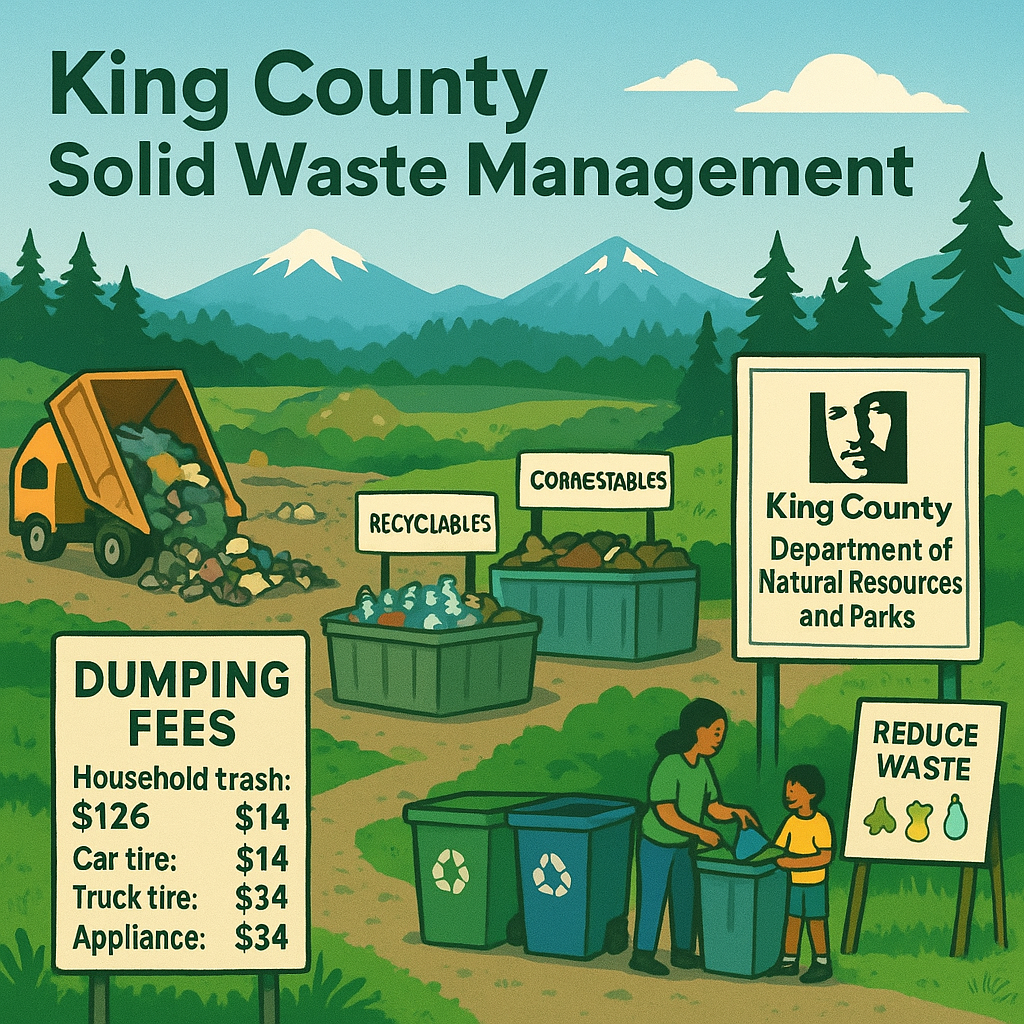
Have you noticed your trash bill creeping up lately? If you live in King County, you’re not alone. The cost of saying goodbye to your garbage is climbing, and it’s all tied to some big changes in how our local landfills operate. Let’s unpack what’s happening with landfill dumping fees, why the King County Department of Natural Resources and Parks Solid Waste Division is making these moves, and what it means for your wallet — and the planet.
What’s Actually Going On with Landfill Fees?
Imagine landfills like a giant, very carefully managed storage unit for everything we throw away. Just like a storage unit, keeping it safe, clean, and organized costs money — and those costs are going up. The Solid Waste Division, part of King County’s Department of Natural Resources and Parks, has adjusted the “tipping fees” — that’s the price tag for every ton of trash dumped at the landfill. In simple terms: when a garbage truck rolls up to Cedar Hills Regional Landfill (our county’s main disposal site), the weight of the trash determines the bill. That per-ton fee just got a little heavier.
Why now? Well, landfills aren’t just holes in the ground. They require constant engineering to protect groundwater, capture methane gas, and comply with strict environmental rules. A major bond measure is helping fund some of these improvements, essentially borrowing money now to pay for big-ticket upgrades and then repaying it over time through fees. Think of it like taking out a home improvement loan to fix a leaky roof — except this roof covers 920 acres of garbage.
Where Does Your Money Go?
It’s easy to feel frustrated when fees rise, but let’s follow the dollar. A big chunk of the increased revenue from landfill dumping fees goes directly toward extending the life of the landfill itself. Cedar Hills is a regional workhorse, but it won’t last forever. Expenses include:
- Cell construction: Building new sections of the landfill, layer by layer, with protective liners that prevent leaks.
- Gas collection systems: Sucking up methane — a potent greenhouse gas — and turning it into energy instead of letting it escape into the air.
- Groundwater monitoring: Testing wells around the clock to make sure nothing harmful sneaks into our water supply.
- Closure and post-closure care: Setting aside funds now so that when the landfill is full, it can be safely capped and monitored for decades.
A significant portion also supports recycling and hazardous waste programs. So while you might pay a little more to toss things out, you’re also funding the trucks that collect your recycling bin and the facilities that keep old paint and batteries out of the dirt. It’s not just a fee — it’s a down payment on a cleaner, safer waste system.
The Bond Measure: Building for Tomorrow Without Breaking Today
You may have heard the word “bond” floating around. What does that really mean for you? Essentially, the Solid Waste Division issued bonds to raise money upfront for urgent infrastructure projects. Instead of suddenly doubling everyone’s bill to pay for a new landfill cell, the cost is spread over many years. It’s like paying for a car in monthly installments rather than all at once. This approach keeps the immediate rate shock manageable while ensuring we don’t run out of safe disposal space.
The catch? Those bond payments become part of the fixed costs the landfill must cover, which influences the dumping fees. It’s a classic balancing act: maintain the infrastructure now, pay gradually, but recognize that the price per ton will inch upward. The alternative — delaying critical maintenance — could lead to much steeper costs, or worse, environmental problems, down the road.
How Does This Affect You at Home?
Unless you’re personally hauling a pickup truck full of construction debris to the dump, you might not see “landfill dumping fee” printed anywhere. But you’ll feel it indirectly. Waste haulers — the companies that pick up your curbside bins — pass those increased costs along to you through your garbage bill. Have you spotted a modest bump in your monthly service charge? That’s the ripple effect. It’s a bit like when gas prices rise; the cost of shipping goods goes up, and eventually you see it at the store.
But here’s the silver lining: this price signal can actually make us smarter about what we throw away. When it costs more to dump, we start to ask ourselves, “Do I really need to toss this?” Maybe that old chair could be fixed instead of junked. Perhaps those food scraps could live a second life in the yard waste bin, turning into compost instead of methane in a landfill.
For businesses, particularly construction companies and restaurants that generate a lot of waste, the impact is sharper. Higher dumping fees often become the nudge they need to embrace recycling and waste reduction in a big way — not just because it’s “green,” but because it saves real money on the bottom line.
Turning Waste Woes into Wins
So, is there a way to keep your personal costs down while these system-wide changes unfold? Absolutely. Think of yourself as a waste minimizer — a superhero whose superpower is creating less trash. Here are a few practical moves that go easy on your wallet and the landfill:
- Master the art of composting: Every banana peel and coffee ground you divert from the garbage can makes a difference. King County offers compost bins at reduced rates, and many cities provide curbside food scrap collection.
- Embrace “waste-free” lunches: Reusable containers and water bottles slash the amount of single-use plastic heading to the dump.
- Donate before discarding: Gently used clothing, furniture, and appliances can find new homes through local charities or online marketplaces. One person’s trash really is another’s treasure.
- Recycle right: “Wish-cycling” — tossing things in the blue bin hoping they’re recyclable — can do more harm than good. Stick to the county’s recycling guidelines to avoid contaminating whole loads.
- Bulk up: Buy pantry staples from bulk bins to cut down on packaging waste. Less packaging means less to throw away.
These small shifts add up. When an entire community gets on board, the collective reduction in landfill-bound trash can actually slow future fee increases. It’s a virtuous circle: less waste means lower costs for the landfill, which helps keep fees more stable over time.
The Bigger Picture: Why This Shift Matters
It’s tempting to view landfill fees as just another tax or surcharge, but they’re part of a much larger transition in how we handle waste. Decades ago, we dumped everything in a pit and forgot about it. Today, a modern landfill is a highly engineered facility that must account for its environmental footprint for 30 years or more after it closes. The fees we pay now guarantee that future generations won’t inherit a toxic mess.
What’s more, King County has some ambitious waste diversion goals. The aim is to send as little as possible to the landfill, extending its lifespan and reducing greenhouse gas emissions. Higher dumping fees naturally encourage everyone — from homeowners to corporations — to find alternatives. It’s a gentle but firm push toward a circular economy where materials are reused, repaired, and recycled rather than buried.
Have you thought about what happens to your trash after the truck picks it up? It travels through a complex system of transfer stations, rail lines, and finally to the landfill face, where it’s compacted and covered. Each step costs money, and when any part of that chain upgrades, those costs trickle down. The bond-funded improvements now underway will modernize that chain, making it cleaner and more efficient for years to come.
Answering Your Burning Questions
Will my garbage bill double overnight?
No. The increases are gradual. Most households will see a small, single-digit percentage change reflected in their quarterly or monthly bills. The bond strategy is specifically designed to avoid sudden leaps.
Does this mean recycling is getting more expensive too?
Not directly. The increased fees apply to garbage, not clean recycling or yard waste. In fact, this pricing gap makes recycling an even better deal. The more you recycle correctly, the less you pay for trash service.
Are there assistance programs for low-income residents?
Yes, many local cities offer utility assistance or discounted waste collection for qualifying households. It’s worth checking with your specific city hall or visiting the King County Solid Waste Division website for links to available resources.
Where can I see exactly where the money goes?
The Solid Waste Division publishes annual reports and budget summaries online. They outline infrastructure projects, bond repayment schedules, and recycling grant programs. Transparency helps hold the system accountable.
Turning Change Into Opportunity
Nobody likes paying more for something they used to get for less. But this moment also offers a chance to rethink our relationship with stuff. Every item we purchase, every container we discard — it all ends up somewhere. When we start seeing trash not as “gone” but as “somewhere else,” the true cost becomes clearer.
The increased landfill dumping fees in King County aren’t just a budget line item; they’re a signal that the way we’ve always done things is evolving. And that evolution brings cleaner air, protected water, and a more resilient community. Next time you wheel your bin to the curb, you’re not just taking out the trash — you’re participating in a county-wide effort to manage resources wisely.
So, what can you do this week to lighten your load on the landfill? Maybe start with one simple habit: carry a reusable bag, compost your apple core, or finally fix that broken toaster. The Earth — and your future garbage bill — will thank you.
Leave a Reply