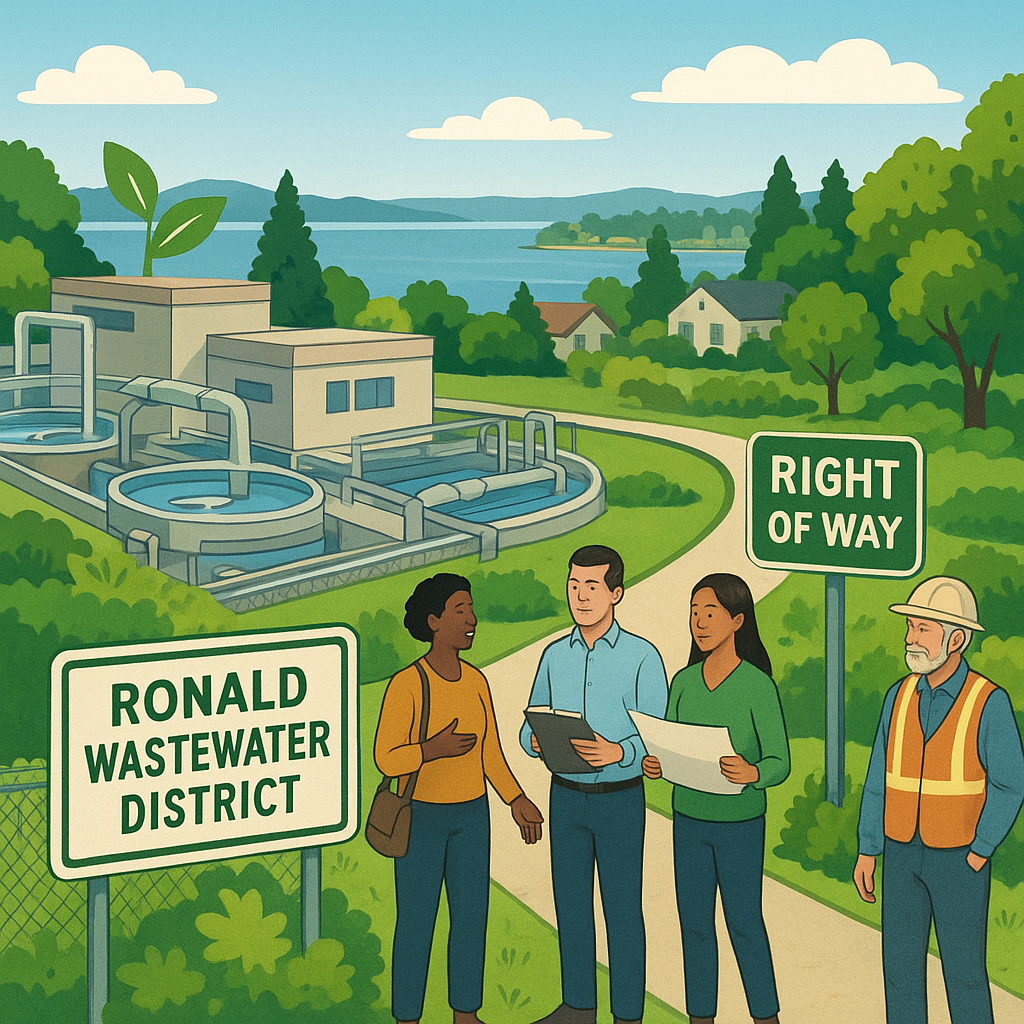
If you live in Shoreline, Washington—or even if you just pay attention to how local governments keep things running smoothly—you might have heard whispers about a clever new approach from the Ronald Wastewater District. They’ve rolled out something called a continuous performance bond for right-of-way work. Before your eyes glaze over, stick with me. This isn’t dry paperwork. It’s a smart shift that saves time, cuts red tape, and ultimately benefits everyone who flushes a toilet or drives down a freshly paved street.
What’s Happening in Shoreline?
The Ronald Wastewater District, which serves the City of Shoreline and surrounding areas, recently introduced a continuous performance bond initiative. In plain English? They’ve found a way to replace a mountain of individual bonds with one seamless, ongoing guarantee. Whenever a contractor needs to dig into a public right-of-way—say, to repair a sewer line or install a new connection—they traditionally had to secure a separate bond for each and every project. That’s like having to renew your driver’s license every single time you get behind the wheel. Exhausting, right? The district’s new system keeps one bond active for multiple jobs over a set period, making the whole process infinitely smoother.
Understanding Performance Bonds: A Quick Analogy
Let’s back up for a second. A performance bond is basically a promise. Imagine you hire a landscaping company to build a patio. You give them a deposit, and they promise to finish the job. But what if they walk away halfway through, leaving a mess of half-laid pavers? A performance bond is like having a trusted friend step in and say, “If they don’t finish, I’ll make sure it gets done, or you’ll get your money back.” In municipal work, that “friend” is a surety company, and the promise protects taxpayers. The bond guarantees the contractor will complete the work correctly, on time, and according to city standards. If they fail, the bond covers the cost to hire someone else.
Most of us never think about these bonds, but they’re the invisible safety net beneath every road cut, water main repair, and sewer upgrade.
The Old Way vs. The New Continuous Bond
Under the old system, contractors working in Shoreline’s right-of-way had to obtain a new bond for each permit. Picture a plumber who does dozens of small sewer repairs each year. Every single time, they’d need to contact their insurance agent, fill out paperwork, pay a premium, and wait for approval. That’s a lot of administrative friction. It also meant the district had to track a stack of individual bonds, each with its own expiration date and terms. The risk of something slipping through the cracks was real.
The continuous performance bond flips that script. A contractor qualifies once, secures a bond that stays in place year-round (or for a multi-year term), and then simply references that bond every time they pull a permit. The district’s staff can verify coverage in seconds. It’s like upgrading from a flip phone to a smartphone—everything gets faster and more connected.
Why the Ronald Wastewater District Made the Switch
The district didn’t just wake up one morning and decide to shake things up. There were some very practical, human-centered reasons behind this move.
Reducing Headaches for Small Contractors
Many of the folks doing right-of-way work are local, small businesses. They don’t have a legal team or a dedicated compliance department. For them, chasing down individual bonds for every job was a drain on time and money. The continuous bond levels the playing field. A small plumbing outfit can compete more easily because they’re not bogged down by repetitive, costly paperwork.
Speeding Up Project Timelines
When a sewer line breaks, nobody wants to wait three days for a bond to clear before the backhoe can start digging. The continuous bond allows for almost immediate mobilization. The contractor is already vetted and bonded, so the district can issue a permit much faster. That means quicker repairs, less traffic disruption, and fewer frustrated residents.
Strengthening Financial Protection
You might worry that a one-size-fits-all bond could leave gaps. Actually, the district worked closely with surety experts to ensure the continuous bond provides robust, consistent coverage. In many ways, it’s stronger because it’s actively managed and monitored, rather than being a patchwork of expiring documents. The district can set the bond amount at a level that covers the typical scope of work within the right-of-way, and they can adjust that amount as needs change.
How Does a Continuous Performance Bond Work?
Let’s break it down into bite-sized pieces. The district establishes a master bond requirement for contractors who regularly work in public rights-of-way. Instead of saying “You need a $10,000 bond for this job and a $15,000 bond for that one,” they say, “Maintain one $50,000 continuous bond (or whatever the threshold is) that covers all your permitted work this year.” The contractor purchases that bond from a surety company. The bond remains in force until it’s canceled or expires, but as long as it’s active, the contractor can pull permits without additional bonding steps.
The district then keeps an eye on the bond’s validity through routine checks. If a claim is ever filed—say, a contractor does shoddy work and refuses to fix it—the district can tap that continuous bond to make things right. It’s streamlined, transparent, and built to handle the rhythm of real-world construction cycles.
Benefits for Contractors and the Community
This isn’t a “contractors win, the public loses” situation. The ripple effects touch every corner of Shoreline.
- Lower costs for everyone: When contractors save on bonding fees and administrative time, those savings can trickle down. Competitive bidding becomes healthier, which can help keep project costs in check for the district and, by extension, ratepayers.
- Better compliance: With a simpler system, contractors are more likely to stay bonded and follow the rules. The district can quickly suspend a contractor’s continuous bond if they fail to meet standards, creating a powerful incentive to do good work.
- Happier neighborhoods: Quicker starts mean shorter construction zones. Nobody enjoys dodging orange cones for weeks. The continuous bond helps projects wrap up faster, lessening the impact on local streets and sidewalks.
- Environmental responsiveness: In emergencies like a sewer spill, rapid response matters. A contractor who’s already bonded can jump into action immediately, reducing the risk of contamination reaching our creeks and Puget Sound.
What Does This Mean for the Future of Right-of-Way Work?
The Ronald Wastewater District’s initiative is quietly pioneering a model that other municipalities could adopt. Think about how many times you’ve seen a pothole repair or a utility upgrade get bogged down in delays. Often, the physical work is straightforward—it’s the paperwork that grinds things to a halt. By rethinking the bonding process, the district is proving that government can be agile and sensible.
Could this spread to other types of permits? Building departments, transportation agencies, and parks systems all face similar challenges. The continuous bond concept might not fit every situation, but in the world of regular, repetitive work like right-of-way access, it’s a no-brainer.
Clearing Up Common Misconceptions
Whenever something new rolls out, questions bubble up. Let’s tackle a few.
“Does a continuous bond mean less oversight?”
Absolutely not. In fact, because the district only has to monitor one bond per contractor instead of dozens, oversight becomes more consistent. Staff can spot lapses immediately and take action. It’s like having a single dashboard for a car’s performance rather than checking each individual tire pressure one by one during a road trip.
“Are contractors getting a free pass?”
No. The bond still carries a financial penalty for failure. If a contractor messes up, the district can make a claim just as they could before. The continuous bond simply removes the repetitive paperwork; it doesn’t lower the bar for quality.
“Will this raise my sewer bill?”
There’s no direct cost passed to ratepayers for the district’s bonding program. The bond is a contractor expense. Over the long term, the efficiencies gained may even help keep operational costs stable, which is good news for everyone’s wallet.
A Small Change with a Big Impact
It’s easy to overlook the importance of something as seemingly dull as a bond. But when you strip away the jargon, what the Ronald Wastewater District has done is remarkably human. They listened to the contractors who said, “This process is killing us with paper cuts.” They understood that every day of delay on a sewer repair means a family might be dealing with a backup, or a street might remain closed longer than necessary. And they crafted a solution that is both financially prudent and practically elegant.
So, next time you see a Shoreline crew opening a manhole or trenching along a curb, know that behind the scenes, a continuous performance bond is quietly keeping that project safe, accountable, and moving ahead. It’s a small innovation that shows how local government can be proactive, not just reactive. And honestly, in a world full of complex problems, there’s something refreshing about an idea that simply makes sense.
Key Takeaways
- The Ronald Wastewater District’s continuous performance bond replaces individual job bonds with one ongoing guarantee for right-of-way work.
- Contractors save time and money, while the district strengthens oversight and speeds up project approvals.
- Faster responses to sewer emergencies protect public health and the environment.
- The streamlined approach could inspire similar models in other cities and utility districts.
- Financial protection for taxpayers remains robust; the bond still ensures work is completed to standard.
Whether you’re a contractor, a curious citizen, or a policy geek, this initiative is a quiet testament to the power of rethinking “the way we’ve always done it.” The Ronald Wastewater District may just be starting a trend that makes right-of-way work a little less tedious for everyone involved. And that’s worth celebrating, one continuous bond at a time.
Leave a Reply