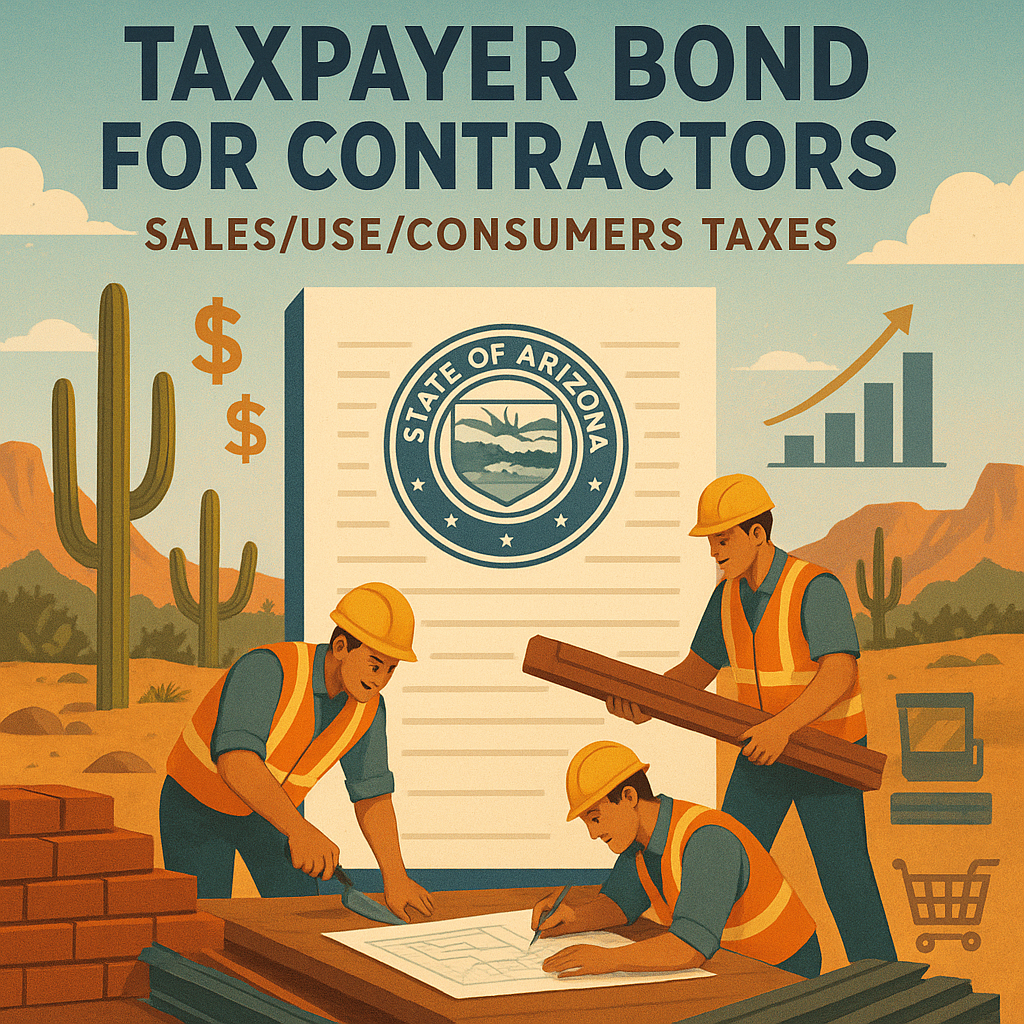
Let’s face it—running a contracting business in Arizona comes with a mountain of paperwork. Licenses, insurance, permits, and then something called a “taxpayer bond” lands on your desk. If your first reaction was, “Wait, I already have a contractor license bond. Why do I need another one?” you’re not alone. The Arizona taxpayer bond, sometimes called a Transaction Privilege Tax (TPT) bond or sales tax bond, is a completely separate requirement that trips up many hardworking contractors.
This guide will walk you through what this bond is, why the state asks for it, and how you can check it off your to-do list without losing your mind. Think of it as a friendly chat over coffee—no confusing jargon, just clear answers.
What Exactly Is an Arizona Taxpayer Bond?
Imagine you run a busy plumbing company. Every time you bill a customer, you collect a little extra for sales tax. That money isn’t really yours—you’re just holding onto it for the Arizona Department of Revenue. A taxpayer bond is a promise that you’ll hand over those collected taxes on time and in full. If you don’t, the bond steps in to make the state whole.
It’s easy to confuse this with a contractor license bond, but they serve very different masters. A license bond protects your clients if you do shoddy work or break contracting laws. A taxpayer bond protects the state’s wallet by guaranteeing your sales, use, and consumer taxes get paid. Both might be required for your business, but one doesn’t replace the other.
Why Would a Contractor Need One?
You might be thinking, “I pay my taxes. I don’t need this extra hassle.” And you might be right—many contractors never encounter this requirement. However, the Arizona Department of Revenue can ask for a taxpayer bond in a few specific situations:
- You’re a new contractor applying for a TPT license. If the state sees a higher-than-average risk in your business model, a bond could be part of the licensing process right from the start.
- You have a history of late tax payments or unpaid taxes. This is the most common trigger. If you’ve missed deadlines before, a bond serves as extra security for future collections.
- Your contractor license is up for renewal, and there’s an existing tax liability. The Registrar of Contractors might flag your file if the Department of Revenue reports unpaid taxes.
- You’ve had a tax assessment or audit that resulted in a balance due. The state might require a bond before you can continue operating.
In short, if Arizona senses any bumps in your tax history, a taxpayer bond becomes your ticket to staying in business.
Breaking Down the Taxes Covered
Most people hear “sales tax” and stop right there. Arizona’s system leans on the Transaction Privilege Tax, which sounds fancy but is really just a tax on the privilege of doing business here. For contractors, it covers things like:
- Sales tax on materials you purchase and resell to clients.
- Use tax when you buy items from out-of-state vendors and don’t pay Arizona tax at the time of purchase.
- Consumer taxes linked to your specific trade, such as taxes on contracting activities.
When a surety company issues your taxpayer bond, they’re standing behind your promise to remit all those tax dollars accurately. Miss a payment, and the state can file a claim against the bond.
How Much Bond Do You Actually Need?
The bond amount isn’t a one-size-fits-all number. The Arizona Department of Revenue sets the required coverage based on your estimated or historical tax liability. For a small residential painter, the bond might be a few thousand dollars. A large commercial general contractor could be staring at a bond well into five figures.
Here’s the good news: you don’t pay that full amount upfront. You only pay a premium, just like buying car insurance. That premium might range from 1% to 10% of the bond total, depending on your credit score, business financials, and the perceived risk. A contractor with solid credit could snag a $25,000 bond for around $250 a year. Someone with rocky credit might pay closer to $2,500 for the same coverage—still far less than having to come out of pocket for the whole bond amount.
Step-by-Step: Getting Your Taxpayer Bond in Arizona
Securing this bond doesn’t have to be a headache. Most contractors follow a straightforward path:
1. Receive the Official Notice
You’ll get a letter or email from the Arizona Department of Revenue explaining that a bond is required and stating the exact amount. Don’t ignore this—there’s usually a deadline.
2. Gather Your Business Details
Surety companies will ask for your TPT license number, business name, entity type, and estimated yearly tax liability. Having all this ready speeds things up.
3. Apply with a Bond Provider
You can work directly with a surety company or use an agency that specializes in contractor bonds. The application typically asks about your personal credit, business history, and any past tax problems.
4. Review Your Quote and Pay the Premium
Once approved, you’ll see the premium amount. Pay that, and the surety issues your bond form.
5. File the Bond with the Department of Revenue
You or your bond provider will send the original bond document to the state. Keep a copy for your records. The Department updates your account, and you’re back in compliance.
What Happens If You Skip This Requirement?
Honestly, ignoring the bond notice is like ignoring a check engine light—it only gets worse. Without the required taxpayer bond, Arizona can suspend or revoke your TPT license. No TPT license means you can’t legally operate as a contractor. The Registrar of Contractors may also refuse to renew your contractor license, effectively shutting your business down.
Beyond the legal shutdown, there’s the financial sting. Late penalties, interest on unpaid taxes, and collection actions can pile up faster than you’d expect. A bond is far cheaper than the cost of doing business underground or racking up fees.
A Common Mix-Up: Taxpayer Bond vs. Contractor License Bond
Let’s clear this up once and for all. Picture two separate safety nets:
- Contractor license bond: Protects your customers and the public from your mistakes. If you fail to finish a job or violate building codes, a claim gets paid to the harmed party.
- Taxpayer bond: Protects the state treasury. If you don’t send in the sales taxes you collected, the state taps this bond for its lost revenue.
Plenty of Arizona contractors hold both bonds simultaneously. They serve different purposes, and neither covers the other. So, if the state asks for a taxpayer bond, don’t wave your license bond in the air—it won’t satisfy the requirement.
Can You Get Bonded If Your Credit Isn’t Perfect?
Yes, you absolutely can. Surety companies understand that tax problems don’t always mean you’re irresponsible. Life throws curveballs—a slow season, a large client not paying on time, an unexpected audit. While good credit unlocks the lowest rates, many providers offer programs for contractors with less-than-stellar credit.
You might pay a higher premium, but think of it as a stepping stone. Pay your taxes on time for a couple of years, clean up your credit, and you’ll likely qualify for better rates down the road. The key is to start the conversation and not assume you’ll be denied.
Keeping Your Bond in Good Standing
Once the bond is in place, a bit of ongoing care keeps everyone happy. Here are a few habits to adopt:
- File and pay your TPT returns on time, every time. Set calendar reminders if you have to. Even a day late can trigger red flags.
- Keep accurate records of all taxable and non-taxable transactions. Arizona’s tax laws for contractors can get tricky—know what’s exempt.
- Communicate with your surety company. If your tax situation changes drastically, let them know. A change in estimated liability might require adjusting the bond amount.
- Don’t ignore Department of Revenue notices. If they tell you the bond needs to be renewed or increased, act fast.
Real-World Example: How a Taxpayer Bond Saved a Roofer’s Business
Picture a roofing contractor in Phoenix. Business boomed during monsoon season, but his bookkeeping fell behind. He missed two quarterly TPT filings, and the Department of Revenue placed a tax lien and demanded a $10,000 taxpayer bond before he could renew his contractor license.
Distraught, he thought he’d have to close shop. Instead, he worked with a bond agency, got the bond for a $600 annual premium, and set up a payment plan for the back taxes. The bond allowed him to keep his license active while he got his finances straight. Two years later, he’s current on all taxes, his credit improved, and his bond premium dropped to $300. That $600 was a small price to pay for survival.
Questions That Come Up Again and Again
Is this bond refundable if I close my business?
The premium you pay for a taxpayer bond is earned by the surety company and generally non-refundable, even if you stop contracting. However, you should notify the state and the surety so the bond can be canceled properly, avoiding any ongoing liability.
How long does a taxpayer bond last?
Most bonds are issued on a continuous basis until canceled. You’ll typically pay the premium annually. The state might require the bond to remain in place as long as your TPT license is active or until the tax liability is resolved.
Does a bond cover taxes I already owe?
No. The bond is forward-looking. It guarantees future taxes you’ll collect. If you already have a tax debt, you’ll need to resolve that separately—often a payment plan combined with the bond as a condition of continued operation.
What if I can’t afford the premium?
Some surety companies offer financing for the premium. Even if you have to stretch the payment over a few months, getting the bond in place keeps your business legal. Losing your license costs far more in lost revenue.
Turning a Requirement into a Strength
It’s easy to view a taxpayer bond as just another annoying hoop to jump through. But flip the perspective. This bond signals to your customers and the state that you’re a responsible contractor who takes financial obligations seriously. It sets you apart from the fly-by-night operators who vanish when tax time rolls around.
Arizona’s construction industry thrives on trust. Homeowners want to know the person remodeling their kitchen won’t cut corners on taxes—and potentially leave them with a mess. By securing the right bonds and staying current on TPT payments, you’re building that trust, one job at a time.
Where to Go from Here
If you’ve received a notice from the Arizona Department of Revenue about a taxpayer bond, don’t panic. Gather your paperwork, reach out to a reputable surety provider, and get the ball rolling. The process can often be completed in a few business days, sometimes even same-day for simple cases.
Remember, you’re not alone in this. Thousands of contractors across the state navigate this exact requirement every year. With a little preparation and the right support, you’ll have that bond in hand and be back on the job site in no time.
And if you haven’t received a notice? Keep those tax records spotless and file every return on time. A clean track record is your best defense against ever needing a taxpayer bond in the first place—though it’s comforting to know the safety net exists when life throws the unexpected your way.
Leave a Reply