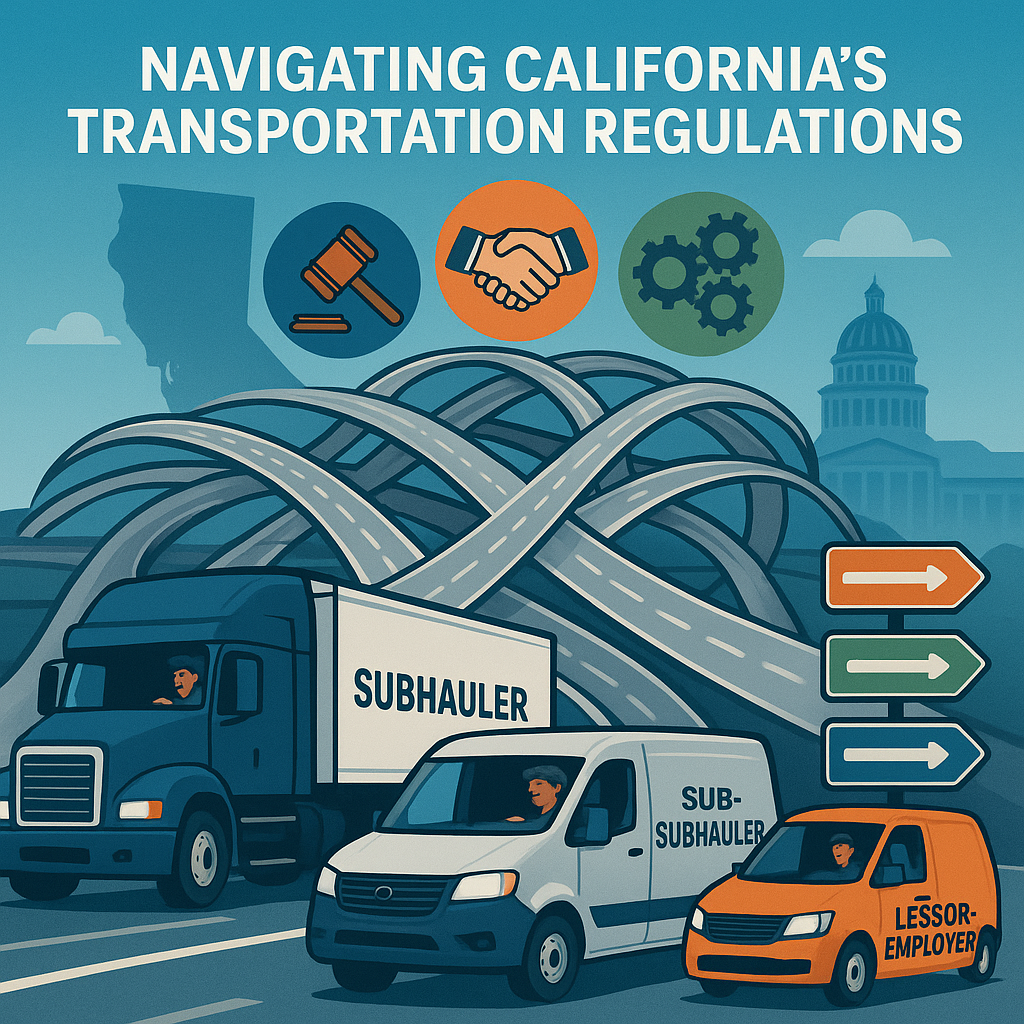
Ever wondered how goods move so smoothly across California’s highways? Behind every truck you see, there’s often a hidden web of agreements and relationships. If you’re a motor carrier, a broker, or even someone leasing out your truck, you’ve probably bumped into terms like subhaulers, sub-subhaulers, and lessor-employees. These aren’t just industry buzzwords—they’re legal definitions under the California Public Utilities Code that can impact your liability, your insurance, and the way you do business.
Let’s walk through this together. We’ll break down what each term really means, why bonds matter, and how all of this fits into the bigger picture of California’s transportation industry. No legal degree required—just a willingness to learn and maybe a cup of coffee.
Why Should You Care About These Definitions?
You might be thinking, “I’m just trying to move freight. Why do labels matter?” Great question. The California Public Utilities Commission (CPUC) uses these categories to decide who needs what kind of permit, who must carry which insurance, and who’s ultimately responsible if something goes wrong. Getting it wrong can lead to fines, lawsuits, or even losing your operating authority. That’s not a headache anyone wants.
Think of it like driving. You don’t just get behind the wheel and hope for the best—you need a license, registration, and insurance that matches your situation. The same goes for hauling freight. The labels help the state keep things organized and safe.
What Is a Subhauler in Simple Terms?
A subhauler is exactly what it sounds like: someone who takes on a hauling job from another motor carrier, not directly from the shipper. Picture this: Company A has a contract to move a load of avocados from Oxnard to San Francisco. Instead of using its own truck, Company A hires Company B to do the actual driving. Company B is now a subhauler. They step in and complete the trip under Company A’s authority, but they often use their own truck, driver, and insurance.
This arrangement is super common in California, especially during peak seasons when demand spikes. Farmers need to get their produce to market, and carriers often juggle more loads than their own fleet can handle. Subhauling fills that gap.
But here’s the catch: subhaulers still have to follow the CPUC’s rules. They need to be properly licensed, carry adequate insurance, and often have their own bond in place. The bond is like a financial promise—it says, “If I break the rules or cause damage, there’s money set aside to make things right.”
Sub-Subhaulers: One More Layer Deep
Things can get even more interesting. What if Company B, the subhauler, can’t handle the job alone? Maybe their truck breaks down, or they’ve got another commitment. They might hire a third carrier—Company C. That’s a sub-subhauler. It’s a subhauler’s subhauler, adding another link in the chain.
You can see how this could get confusing fast. Who’s responsible if the avocados arrive bruised? Who pays if there’s an accident? The CPUC pays attention to these layers because liability doesn’t simply vanish when you pass a job along. In many cases, the original carrier (Company A) still holds some responsibility, and so does the broker who arranged the whole thing. Everyone needs to be on the same page about permits and bonds.
Imagine a relay race. The baton is the freight. If one runner stumbles, the whole team might be affected. That’s why California law requires certain parties—especially transportation brokers—to carry a bond under the Public Utilities Code. That bond acts like a safety net for the shipper and the public.
Lessor-Employees: A Special Hybrid Role
Now let’s talk about a term that often raises eyebrows: lessor-employees. This one’s a bit of a hybrid. A lessor-employee is someone who owns their own truck but leases it—along with their driving services—to a motor carrier. They’re not exactly an independent contractor, and they’re not a standard employee either. They fall somewhere in the middle, governed by a lease agreement that spells out who controls what.
Here’s an example to make it stick. Maria owns a clean, well-maintained box truck. She signs a long-term lease with a major carrier, agreeing to drive exclusively for them. The carrier handles dispatch, provides cargo insurance, and even puts their logo on her door. Maria wears the carrier’s uniform and follows their policies. Under California rules, she might be treated as a lessor-employee. This means her relationship is more tightly regulated, often requiring the carrier to provide workers’ compensation insurance and treat her almost like a full-time driver.
Why does this matter? It affects taxes, liability, and compliance. If you’re a carrier leasing trucks from individuals, misclassifying a lessor-employee as a pure independent contractor could invite a CPUC audit or financial penalties. The state wants to make sure that people like Maria are protected in case of injury, and that the public isn’t left holding the bag if something goes wrong.
The Bond Requirement: A Closer Look
You’ve probably noticed we keep circling back to the word bond. In the context of California’s Public Utilities Code, a transportation broker bond is a type of surety bond. Think of it as a financial guarantee issued by an insurance company. If a broker violates the code—say, by failing to pay a subhauler or causing financial harm—the injured party can file a claim against the bond.
This isn’t optional for brokers operating in California. The CPUC requires transportation brokers to file a bond as part of their permit application. The bond amount can vary, but it’s there to protect shippers, carriers, and the public. It sends a clear message: “We take accountability seriously.”
For subhaulers and sub-subhaulers, the bond requirement might apply indirectly, or they may need their own bond depending on their authority. It’s a web of financial safety nets, and each thread is important.
How Does the Bond Actually Work?
Let’s say a small produce broker hires a subhauler to run a load of lettuce from Salinas to Los Angeles. The subhauler does the work, but the broker never pays them. The subhauler can file a claim against the broker’s bond to recover the unpaid freight charges. The surety company investigates, and if the claim is valid, pays the subhauler up to the bond’s limit. Then the broker has to repay the surety company. It’s protection, not a free pass.
This system keeps everyone honest—or at least gives them a reason to stay that way.
Common Pitfalls and How to Avoid Them
Navigating these relationships can feel like walking through a maze. Here are a few real-world pitfalls to watch for:
- Assuming a subhauler’s insurance covers everything. Always verify that their policy is active and meets California’s minimums. Ask for a certificate of insurance with your company named as an additional insured.
- Forgetting about the sub-subhauler layer. If you’re a subhauler, make sure your contract covers what happens if you subcontract the work. You might still be on the hook.
- Treating a lessor-employee as a casual independent contractor. This can trigger audits and employment law violations. Work with a good transportation attorney to draft your lease agreements.
- Ignoring the bond renewal date. A lapsed bond can put your broker permit at risk. Mark your calendar and keep the bond active without gaps.
Does any of this sound familiar? If you’ve been in the industry for a while, you’ve probably heard a horror story or two. The good news is that with a little diligence, these pitfalls are entirely avoidable.
Why Small Carriers and Owner-Operators Should Pay Attention
Maybe you’re an owner-operator with one truck. You might think these regulations are only for big brokers. Not true. If you ever lease your truck and driving services to another carrier, you could be stepping into lessor-employee territory. And when you take a load from a carrier that isn’t the shipper—even if it’s just a one-time favor—you’re acting as a subhauler. Understanding the label helps you ask the right questions about insurance, liability, and payment terms.
Ask yourself: “If this load gets damaged, who pays?” “Do I have enough insurance to cover a worst-case scenario?” “Have I seen the broker’s bond information?” These aren’t rude questions. They’re smart business.
Putting It All Together in the Real World
Let’s tie everything together with a quick scenario. SunRay Transport is a licensed motor carrier that wins a contract with a major almond grower. They don’t have enough trucks, so they call GoldLine Logistics, a subhauler. GoldLine’s truck is in the shop, so they pass the job to a reliable owner-operator, Vince, who leases his truck full-time to GoldLine under a written agreement.
Here’s how the labels stack up: SunRay is the original carrier. GoldLine is a subhauler. Vince might be a sub-subhauler (or, depending on the lease, a lessor-employee of GoldLine). If SunRay used a broker to find the load, that broker must have a bond on file with the CPUC. Vince still needs his own operating authority if he’s not exclusively leased, but in this case his lease might satisfy the requirement.
It’s a layered sandwich, but each layer follows rules designed to protect the entire food chain—from grower to grocery store.
Staying Ahead of the Curve
California is known for strict transportation regulations, and they can change. The best thing you can do is keep learning. Subscribe to CPUC updates, join industry associations, and build a relationship with a transportation compliance expert. When you understand the framework of subhaulers, sub-subhaulers, and lessor-employees, you’re not just checking a box—you’re securing your business against surprises.
Remember, these definitions aren’t there to make your life difficult. They create clarity in a fast-moving, high-stakes industry. The next time you sign a contract or hand off a load, you’ll know exactly what role you’re playing and what protections you—and the public—deserve.
So, what’s your relationship to the load? Are you the carrier, the subhauler, or a lessor-employee? The answer can shape everything from your insurance bill to your peace of mind. Take a moment to find out, and you’ll be miles ahead.
Leave a Reply