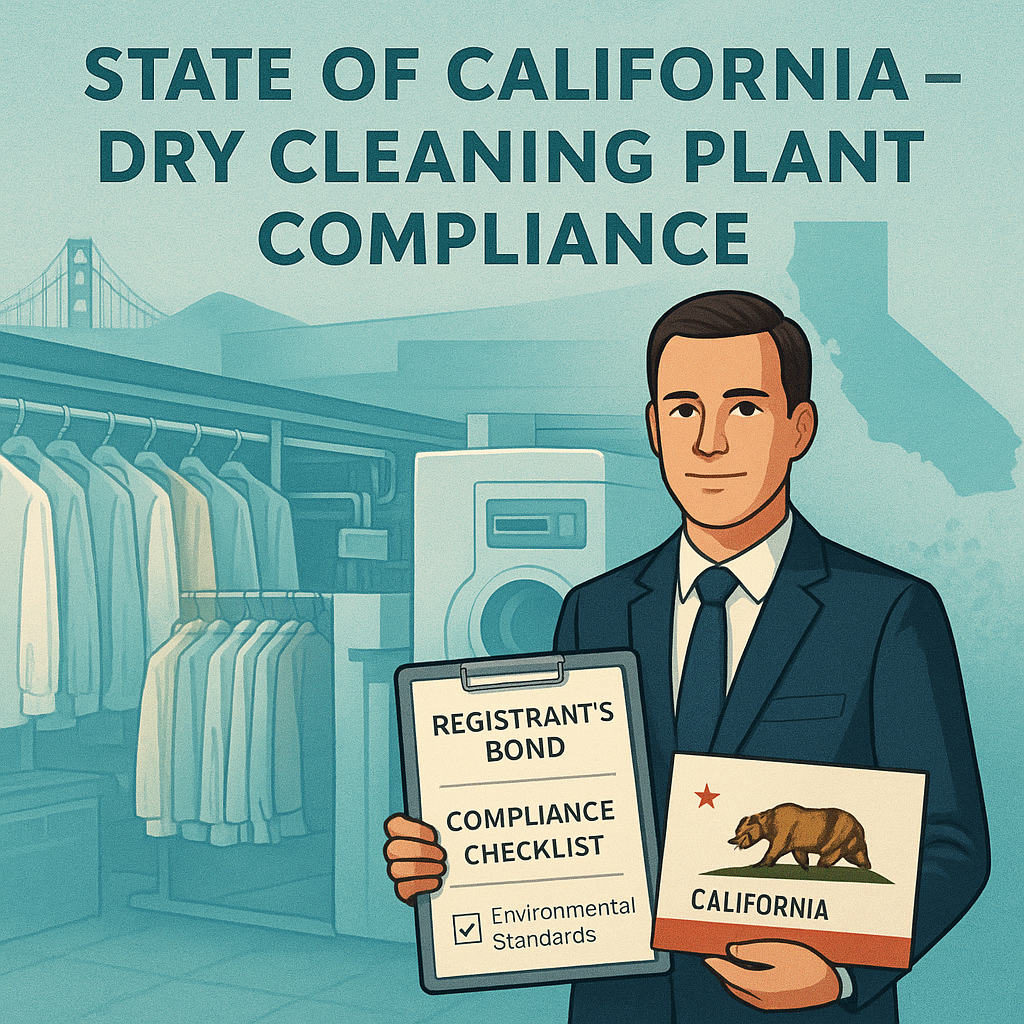
Running a dry cleaning business in the Golden State comes with more than just great spot-removal skills. If you plan to own or operate a dry cleaning plant in California, you need to navigate a few important state requirements. One of those key pieces is the California Dry Cleaning Plant Registrant’s Bond. Don’t let the official name intimidate you—think of it as a financial promise to play by the rules. Let’s break it all down in simple, everyday language so you know exactly what to expect, why it matters, and how to get it without a headache.
What Exactly Is a Dry Cleaning Plant Registrant’s Bond?
At its core, the California Dry Cleaning Plant Registrant’s Bond is a type of surety bond. A surety bond isn’t insurance for your business—it’s a three-party safety net. The state (the obligee) requires you (the principal) to purchase a bond from a surety company. If you fail to follow the laws governing dry cleaners, a claim can be made against that bond to compensate the state or affected parties. The bond essentially says, “We trust you’ll do things right, but here’s a backup plan just in case.”
In California, this bond is tied directly to your registration as a dry cleaning plant. You can’t legally operate without it. It’s required by the California Air Resources Board (CARB) under the Dry Cleaning Industry Regulations. So, if you’re getting ready to open your doors or renew your registration, this bond will be front and center on your checklist.
Why Does California Require This Bond?
You might be wondering: why the extra hoop to jump through? Dry cleaning uses chemicals—perchloroethylene (perc) being the most common—that can pose environmental and health risks if mishandled. The state wants to ensure that every plant operator takes proper care of equipment, waste disposal, and emissions standards. The bond isn’t just a fee; it’s a financial incentive. If a cleaner violates regulations and refuses to pay fines or clean up contamination, the bond provides funds to cover those costs.
This protects the environment, public health, and your neighbors’ peace of mind. So while it may feel like another bureaucratic step, it’s really about keeping the industry accountable and communities safe. And honestly, most dry cleaners operate responsibly—you’ll probably never even hear about your bond again after you buy it, as long as you follow the rules.
Who Needs This Bond? (Spoiler: Probably You)
If you’re asking this question, you’re likely in the right place. Any business that operates a “dry cleaning plant” as defined by California law needs this bond. That includes traditional brick-and-mortar cleaners, industrial-scale facilities, and even mobile dry cleaning units if they meet the plant definition. It doesn’t matter if you use perc, hydrocarbons, or “green” solvents—the registration requirement (and bonding obligation) usually still applies. There are a few exceptions for very tiny operations or certain types of equipment, but it’s safest to assume you need it and verify with CARB.
Also, if you’re buying an existing dry cleaning business, make sure the bond is current before you take over. The registration and bond don’t automatically transfer—you’ll need to secure your own or update the existing one under your business name.
How Much Does the Bond Cost?
This is the big question on everyone’s mind. The required bond amount set by the state is $25,000. But here’s some great news: you don’t need to pay $25,000 out of pocket. The bond premium—what you actually pay—is only a small percentage of that total. For most applicants, the premium ranges from $188 to $375 per year, depending on your personal credit, business financials, and the surety company you choose.
If your credit is excellent, you could snag a rate at the low end of that range. Even with less-than-perfect credit, many sureties offer programs to help you get bonded. Think of it like renting a financial safety net rather than buying it outright. Some providers also offer the option to pay for a multi-year term to lock in a lower annual rate and avoid renewal hassle.
Factors That Influence Your Bond Premium
Wondering why rates vary? Here’s what surety companies typically look at:
- Personal credit score – Higher scores usually mean lower premiums.
- Business experience – Years in the industry and a clean compliance record help.
- Financial stability – The surety may review business assets and liquidity.
- Claims history – Past bond claims can increase the perceived risk.
Don’t worry if you’re just starting out. Many new dry cleaners get bonded without a lengthy business history. The key is to work with a surety agency that understands the dry cleaning sector and can match you with a competitive rate.
How to Get Your California Dry Cleaning Bond in 4 Simple Steps
Securing this bond isn’t complicated. Here’s a straightforward roadmap:
- Choose a surety bond provider. Look for a company that specializes in license and permit bonds, and ideally one familiar with California’s environmental regulations. Online specialists can often give you a quote in minutes.
- Apply with basic information. You’ll share details about your business and personal credit history. The application is usually short—think name, address, Social Security number (for a credit check), and business entity type.
- Receive your quote and pay the premium. Once approved, you’ll see your exact price. After payment, the surety issues the bond form.
- File the bond with CARB. You (or the surety) will send the original bond document to the California Air Resources Board along with your registration or renewal paperwork. Keep a copy for your records.
That’s it. Many bonded dry cleaners find the entire process takes less than a day when done online.
Maintaining and Renewing Your Bond: Don’t Let It Lapse
Your registration—and your bond—must stay active as long as you operate. Most bonds come with an annual renewal term that aligns with your state registration period. You’ll get a renewal notice from your surety company before it expires. If you let it lapse, the state can suspend your registration, which means you can’t legally do business until you reinstate it. That’s a situation no one wants.
Mark your calendar for renewal, or even better, set up automatic renewal through your bond agency. Think of it like renewing your driver’s license: a small task that prevents big problems down the road.
What Happens If a Claim Is Filed Against Your Bond?
Real talk: a bond claim is serious. If your dry cleaning business violates state regulations—say, by improperly disposing of hazardous waste or refusing to pay an environmental fine—CARB or another affected party can file a claim against your $25,000 bond. The surety will investigate, and if the claim is valid, they’ll pay out up to the bond amount to make things right.
But here’s the catch: the surety isn’t giving you a free pass. You are legally required to reimburse the surety for every penny they pay on a claim. So ultimately, you’ll foot the bill. That’s why staying compliant is your best protection. Fortunately, most dry cleaners never face a claim. With proper maintenance, training, and adherence to CARB’s rules, your bond will remain just a piece of paper in your filing cabinet.
Common Questions from Dry Cleaning Business Owners
Does my drop-off store need a bond if I send clothes to another plant?
Typically, the bond requirement applies to the facility doing the actual dry cleaning—the plant itself. A drop store or satellite location that merely gathers clothes and sends them out doesn’t usually need its own plant registration bond, but you should still check with CARB to be certain. If your store operates any on-site cleaning equipment that meets the “plant” definition, the rules change.
Is this bond the same as an insurance policy?
No, and mixing them up can cause confusion. Insurance protects your business from unforeseen accidents like a fire or a customer slipping on a wet floor. The bond, on the other hand, protects the state and the public from your failure to follow the law. It’s a guarantee of performance, not a shield for your own losses.
Can I get bonded with bad credit?
Yes, it’s still possible. While excellent credit gets you the best rate, many sureties offer bonds to individuals with low credit scores. Your premium might be higher, but you can still meet the requirement and open your doors. Some companies even specialize in high-risk bonds, so don’t give up before you talk to a professional.
A Real-World Analogy: The Rental Car Deposit
If the surety bond concept still feels fuzzy, imagine renting a car. The rental company doesn’t know if you’ll return the car undamaged, so they place a hold on your credit card for, say, $500. You don’t actually pay $500 unless something goes wrong. The bond works similarly: the state puts a $25,000 “hold” on your business’s financial credibility. You pay a small fee (the premium) to keep that hold in place. As long as you return the metaphorical “car” in good shape—meaning you comply with all regulations—you never lose that $25,000. If you mess up, the hold gets used to cover the consequences, and you’ll have to repay that amount.
Why This Bond Is a Smart Investment for Your Business
Beyond meeting a legal must-have, the California Dry Cleaning Plant Registrant’s Bond can also boost your reputation. Customers and commercial clients concerned about environmental safety will appreciate that you’re bonded—it signals that you’re a legitimate, accountable operation. In a competitive market, that extra layer of trust can set you apart. Plus, staying on top of your bond and registration keeps your business interruption risks low. No one wants to explain to loyal clients that you’re temporarily shut down over a missed renewal.
Take the Next Step with Confidence
Now that you understand what the bond is, why it’s required, and how to get it, you’re ready to move forward. Don’t let this step stall your entrepreneurial dreams. Reach out to a reputable surety bond agency today, get your quote, and lock in your bond. Then you can focus on what you do best—keeping California’s wardrobes fresh, clean, and well-cared for.
Remember, compliance isn’t just about avoiding penalties. It’s about building a business that lasts, respects the environment, and earns the community’s trust one pressed shirt at a time.
Leave a Reply